
The Gleam of Tradition: The Art of Lacquerware in Hue

More Than a Craft, a Masterpiece in Layers
As you delve deeper into the art of Hue, you’ll discover that not all of its masterpieces are on canvas. One of the city’s most treasured art forms is lacquerware, a craft that is as much a testament to patience and precision as it is to creative genius. This intricate and time-consuming art form has a long history in Vietnam, with Hue serving as a significant hub due to its royal patronage and abundance of natural resources.
Lacquerware begins with the sap of the Sơn tree, which is indigenous to Vietnam. This raw material is processed and applied in multiple thin layers—often more than a dozen—to a surface, such as wood, bamboo, or even ceramic. The process is painstaking, with each layer needing to dry for days in a humid environment before being meticulously sanded. This lengthy cycle of applying, drying, and sanding is what gives lacquerware its incredible durability and a depth of color that seems to shift in the light.
What makes Vietnamese lacquerware truly special is the technique of inlaying materials into the layers of lacquer. Artisans in Hue are renowned for their skill in creating stunning images by embedding materials like mother-of-pearl, eggshell, gold leaf, and silver leaf into the lacquer. The tiny, iridescent pieces of mother-of-pearl are painstakingly cut into delicate shapes—a flower petal, a crane’s wing, or a wisp of a cloud—and then carefully placed by hand. When the lacquer is polished, these inlays are revealed with a brilliant, luminous gleam, creating a breathtaking contrast against the dark background.
In Hue, you can find a variety of lacquerware items, from small decorative boxes and bowls to large, ornate wall panels and furniture. These pieces often depict scenes from Vietnamese folklore, tranquil landscapes of the countryside, or symbols of good fortune like dragons and lotuses. They are not just objects; they are a form of storytelling, with each piece narrating a piece of Vietnamese culture and history.
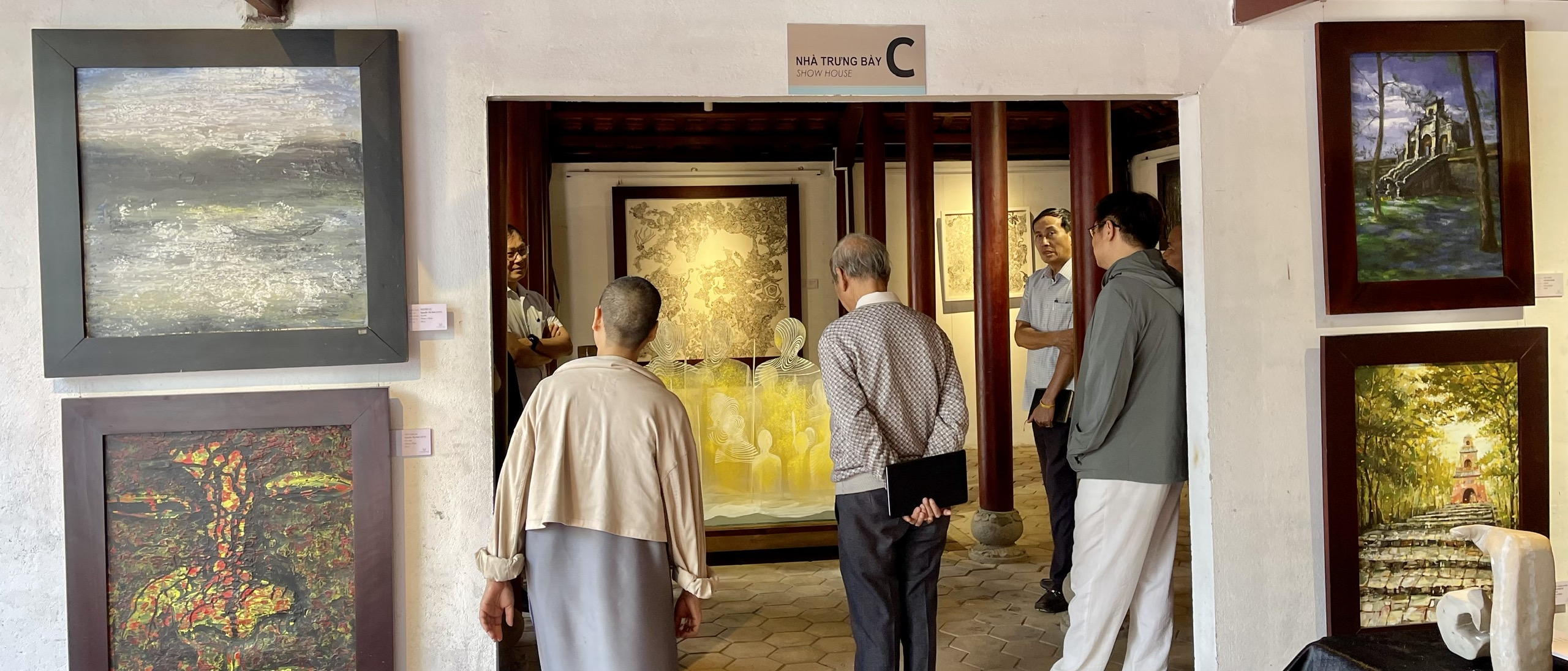
The art of lacquerware is a perfect example of how traditional art forms continue to thrive in Hue. While the city’s artists, like those at the Ngọc Ân Museum, are exploring modern techniques and themes, they often draw inspiration from and even incorporate these ancient crafts. The use of lacquer and its signature luster can be seen in the works of many contemporary painters who seek to add a unique texture and a touch of cultural heritage to their art.
For a visitor, seeing a master lacquer artisan at work is a captivating experience. It offers a glimpse into a world where art is a meditation, a slow and deliberate process that rewards patience with breathtaking beauty. A piece of authentic lacquerware is not just a souvenir; it is a piece of Vietnamese art history, a luminous echo of a timeless craft that continues to shine brightly in the heart of Hue.