
A Symphony of Colors: The Palette of Hue

From the Royal Citadel to the Artist’s Canvas
If Hue were a painting, its dominant colors would be a soft, misty gray from the sky, a deep green from the surrounding mountains, and a rich red from its historical palaces. Color in Hue is more than just a visual element; it is a language, a symbol, and a reflection of the city’s soul. This deep connection between the environment, culture, and art makes Hue a fascinating destination for anyone who appreciates the power of a palette.
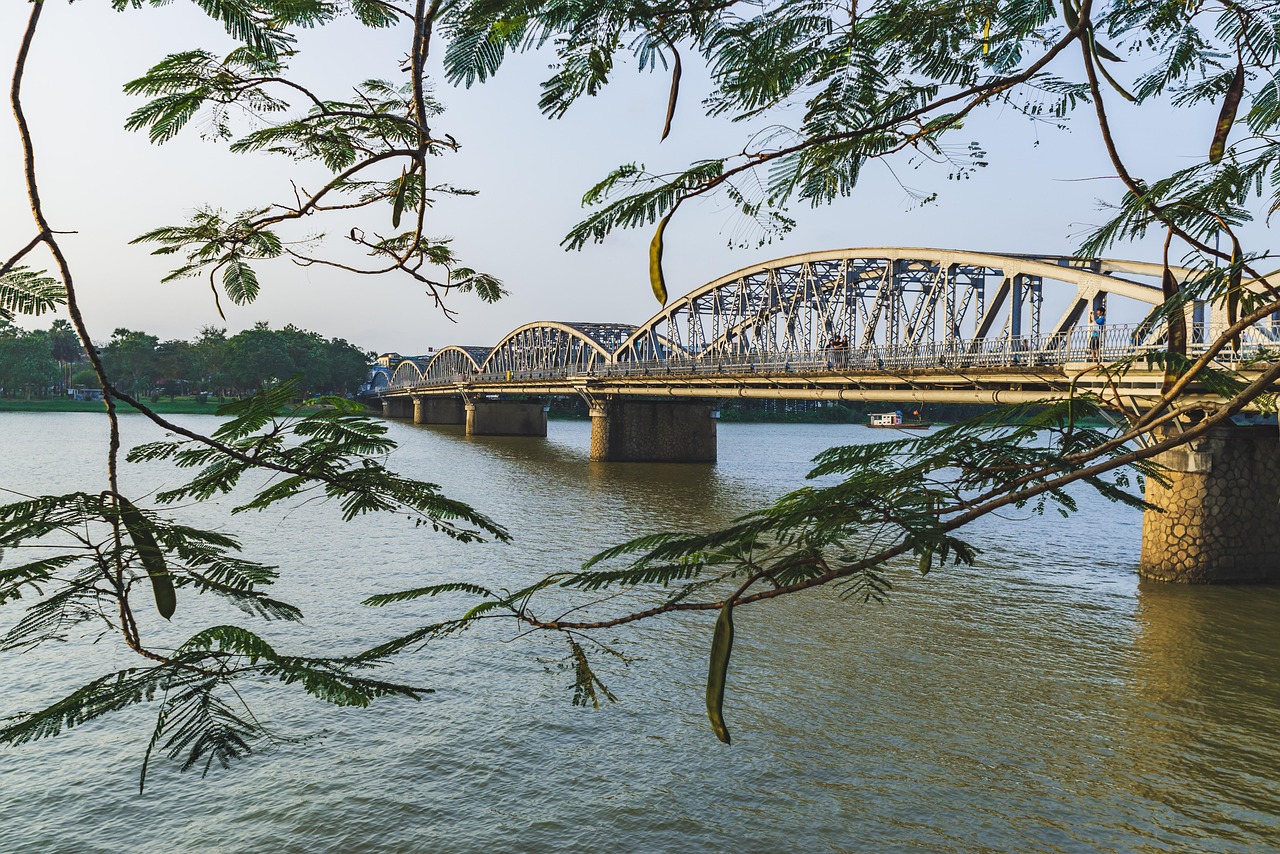
The city’s natural landscape provides the foundational hues. The Perfume River shifts from a gentle silver in the morning mist to a shimmering gold at sunset. The lush green mountains of the Ngu Binh Range provide a constant, serene backdrop. The purple flowers of the Jacaranda trees that bloom along the streets in spring offer a splash of vibrant color. Artists like Hoàng Thanh Phong have masterfully captured these natural tones, using subtle gradations of color to evoke a sense of calm and tranquility that is so characteristic of Hue. His landscapes are a study in soft, contemplative colors that reflect the city’s gentle, introspective nature.
In stark contrast to the natural world’s soft palette is the bold, symbolic use of color in Hue’s imperial architecture. The Forbidden Purple City (Tử Cấm Thành) is a name that itself speaks to the importance of color. Purple was the exclusive color of the emperor and the royal family, symbolizing luxury, power, and authority. The vibrant red of the palace gates, the intricate gold leaf on the throne rooms, and the deep blue and green of the ceramic tiles on the rooftops all hold specific meanings rooted in ancient philosophies. For instance, red often symbolizes good fortune and happiness, while gold is associated with royalty and prosperity. This imperial palette is not random; it is a carefully chosen visual code that tells the story of power and tradition.
Modern Hue artists, like Nguyễn Thị Huệ, continue this tradition of symbolic color use, but with a more personal touch. While she might paint a woman in a traditional red áo dài to represent a celebratory occasion, she might also use a fiery orange or a deep blue to convey a specific emotion or a cultural narrative. Her use of color is a tool for storytelling, adding layers of meaning to her figurative works. This blend of traditional symbolism and personal expression is what makes her art so compelling.
The art of lacquerware, a unique Vietnamese tradition, also showcases the importance of color in Hue. Lacquer artists work with a limited palette of natural colors—black, red, brown, and gold—to create scenes that are both highly decorative and deeply meaningful. The black background, derived from the sap of the Sơn tree, provides a perfect foil for the vibrant reds and shimmering gold leaf, creating a sense of dramatic contrast and luxury.